
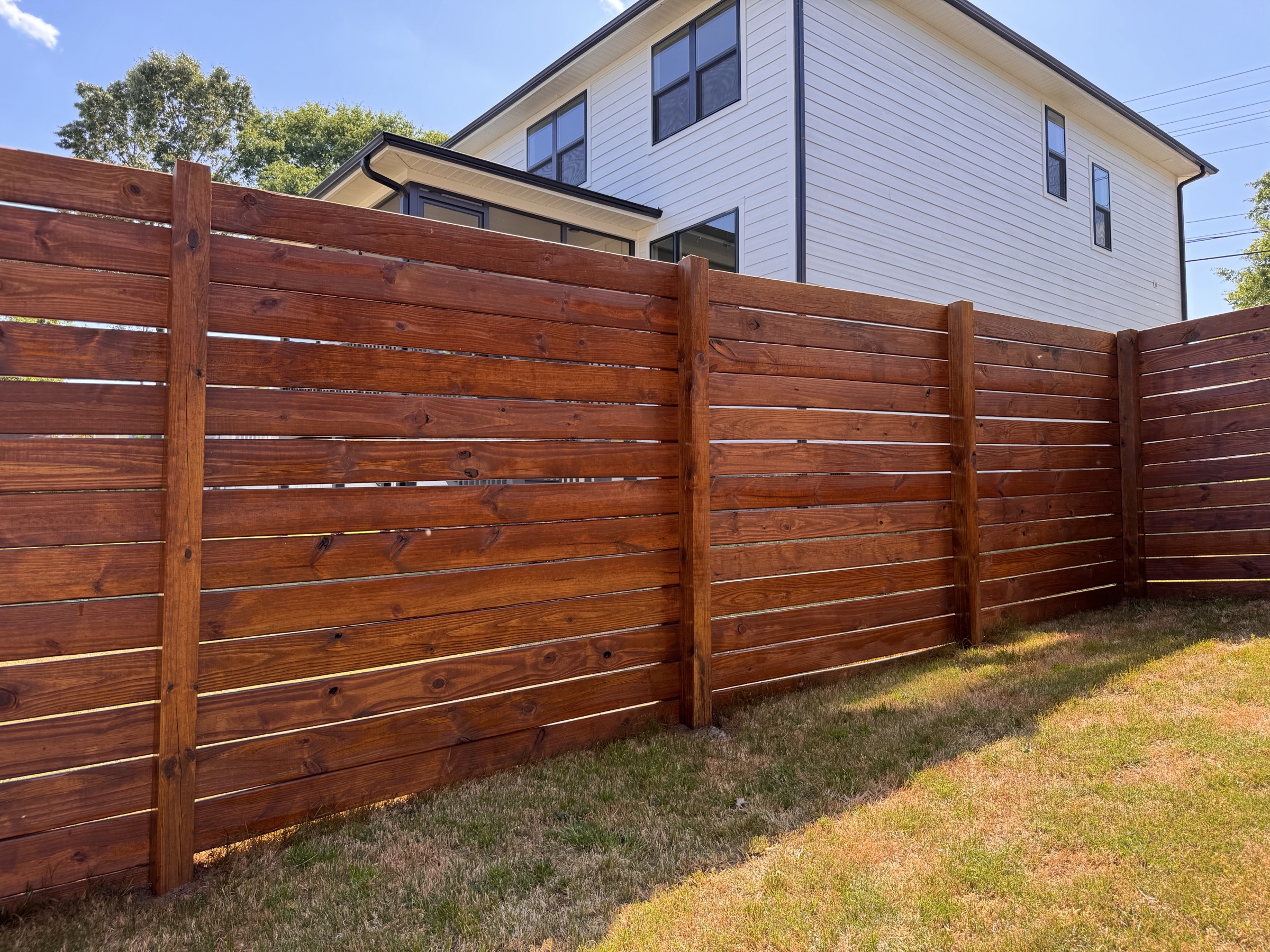
Every November the same myth goes around: you cannot stain a fence in winter. Tell that to a dry 58-degree January afternoon in Duncan. The Upstate is not Minnesota. Our winters are mild, our cold snaps are short, and there are legitimate staining windows in every month of the year if you know what conditions actually matter. The calendar is not the boss of this job. The wood and the forecast are.
Myth one: stain cannot cure in the cold. That is true for water-based products and mostly false for oil. Water-based stain hates freezing, both in the can and on the board, because the water carrier can ice up before the finish coalesces, and then the whole coat is junk. Oil-based stain has no water in it to freeze. Many oil products apply fine down toward freezing temperatures, as long as the wood is dry and you are not staining into a wash-off rain. The product sheet is the law, and we read it.
Myth two: the wood is too wet in winter. Often the opposite. Winter air in the Upstate is frequently drier than our swampy summer air, and a fence that spent the fall in sun and breeze can meter beautifully in January. We have checked winter fences that read drier than July fences after a storm week. Oil-based stain wants wood below 13% moisture, and the meter, not the month, decides whether the wood is ready.
Myth three: winter jobs fail more. Failures come from trapped moisture and film finishes, not from the date. A fence stained on a dry 55-degree winter day, on wood that metered under 13%, with no rain coming, will outlast a fence stained in August on damp boards because the schedule "had to" move. Conditions make the job. The season just changes which days qualify.
The real winter rules are simple. Watch the surface temperature of the wood, not just the air: a 60-degree afternoon does not thaw boards that sat in frost all night, so we start late morning and quit before the evening drop. Respect the overnight low: if a hard freeze is coming right after application, that product sheet gets read again. And give the cure its time. Chemistry slows in the cold, full stop.
That slower cure is the one honest trade of winter work. Plan on patience, not a 24-hour party on the deck. Dry-to-touch can stretch, and full cure takes longer than the summer version. The flip side is that longer open time makes application easier: no flash-drying in blasting sun, no fighting lap marks on hot boards, and a finish that levels out calm instead of being baked in place.
Why does oil thrive in this? Because the chemistry has no freeze point problem, the solvents still flash at lower temperatures, and the deeper penetration does not depend on warm air the way water-based film formation does. And once cured, oil still tends to outlast water-based film in this climate: think years of slow weathering instead of peeling sheets after the second humid summer.
There is a scheduling bonus nobody talks about. Winter is the slow season for exterior work, which means faster turnaround from estimate to job day, and your fence is already armored when spring pollen dumps and summer UV arrive. A fence installed in the fall is often perfectly dried by January, so winter is also when a lot of new fences are finally ready. Waiting for April because of a myth just means four more months of unprotected weathering.
What we check before saying yes to a winter job: the moisture reading on the actual boards, the product sheet temperature range, a dry forecast window with overnight lows we can live with, and the surface temperature of the wood on the morning of the job. If any of those say no, we wait a week. Winter windows come and go, and taking the wrong one helps nobody.
If you want to knock out a fence in January, call. We will meter the wood and look at the forecast, and if the conditions line up, you get the same flat-rate quote, the same 12-month workmanship warranty, and a fence that is protected before spring even starts. 864-800-8275. Greenville, Spartanburg, Greer, Duncan, and the rest of the Upstate.