
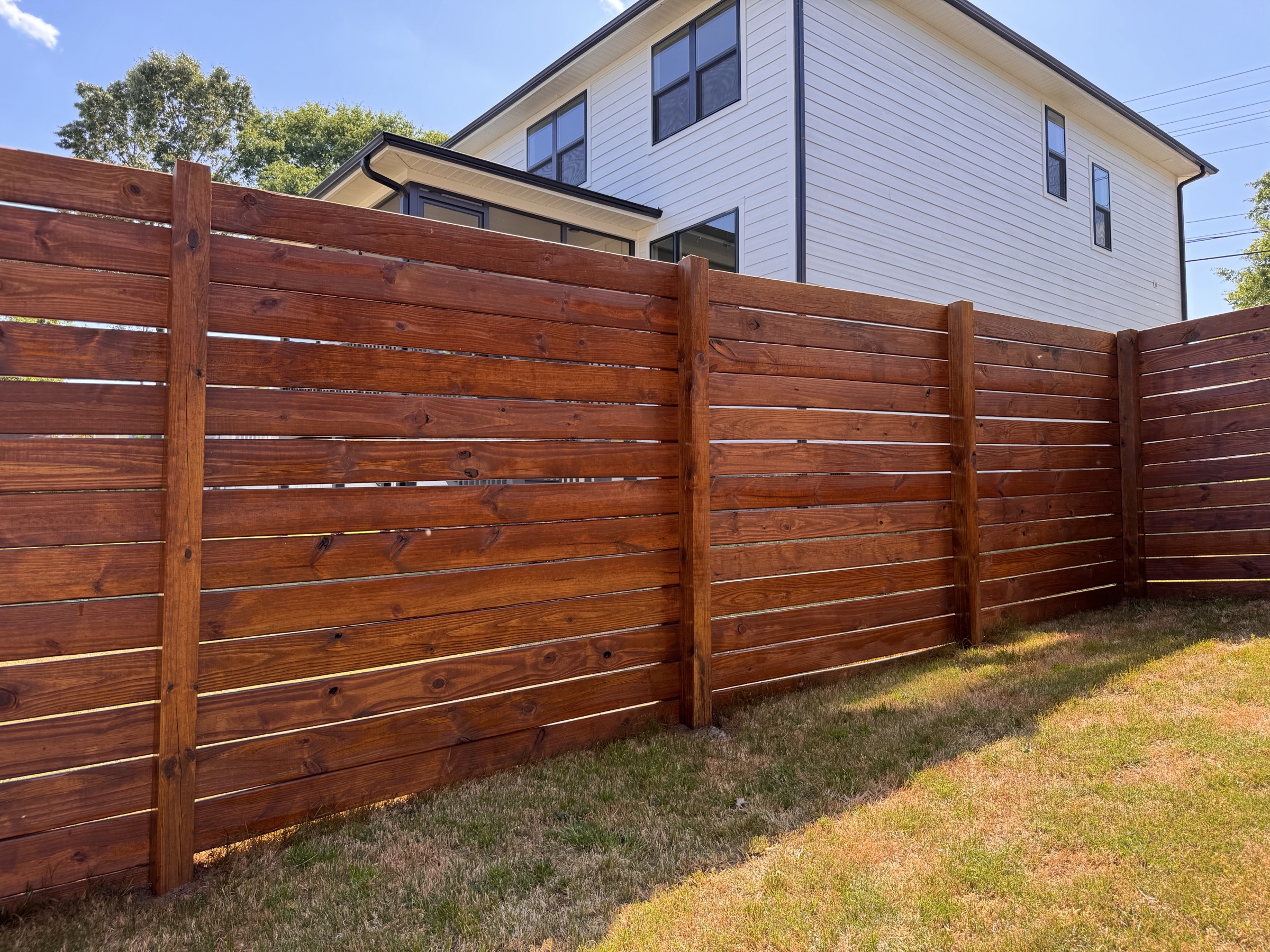
Color is the fun part. Opacity is the part that decides how the fence ages, and it is the decision most people do not know they are making. Two fences stained the same brown can be on completely different maintenance schedules because one is semi-transparent and one is semi-solid. Pick both on purpose and you will love the fence longer.
The opacity ladder runs four steps. Transparent stain is nearly clear: maximum grain, minimum pigment, and the shortest protection cycle. Semi-transparent adds pigment while keeping grain clearly visible. Semi-solid hides most weathering and still reads as wood. Solid stain covers like paint while (in the right products) behaving better outdoors. More pigment means more UV blocking, which means longer between coats.
Transparent finishes are for new, beautiful wood you want to show off, usually cedar. They look fantastic and ask the most of you: in full Upstate sun, expect the shorter end of the 2 to 6 year re-stain range. If the fence is the landscaping feature and you accept the upkeep, transparent is a legitimate choice. Just make it with open eyes.
Semi-transparent is the popular middle: real grain, real color, and a maintenance cycle most families can live with. Semi-solid is what we recommend for a lot of new and weathered pine around Greenville and Spartanburg, because it hides the patches and watermarks that pine collects while still looking like a wood fence. On a fence with mixed-age boards or old repairs, semi-solid makes the whole line read as one.
Solid stain deserves an honest warning. It can look closer to paint, which some folks want, but many solid products are water-based film-formers. In our sun and humidity, films peel, and then you are stripping every 4 to 5 years instead of washing and recoating. There are solid products we will stand behind and plenty we will not. If solid is the look you want, we will steer you to the ones that behave.
On color itself: barnwood, cedar, redwood, warm browns, and walnut come up constantly against Upstate brick, and barnwood might be the single most requested look we do. Darker tones hide weathering and mildew staining better; lighter tones show grain more and run cooler in the sun. Both fade, and south and west faces fade first. That is normal, not a defect.
A few practical checks before you fall in love with a swatch. Bring a photo of the house, because the fence has to live next to the brick, the siding, and the roof color. Check your HOA covenants if you have them; we have stained over 5,000 linear feet for HOAs and developers, and approved color lists are common. And remember that stain reads darker on rough, thirsty wood and lighter on smooth wood, so the same can looks different fence to fence.
The right way to choose is a sample on your actual boards. Colors shift with wood species, age, and sun angle, and a swatch at the store is a liar. On estimates we talk color against your house, and we are an Expert Stain and Seal dealer, so the palette is deep. The color consult comes free with the estimate, because a fence you love the look of is a fence you will maintain.
Ready to pick? Call or text 864-800-8275 or send the form with a photo of the house and the fence. We serve Greenville, Spartanburg, Greer, Duncan, Simpsonville, Mauldin, and the surrounding towns, and we will bring the options to you.