
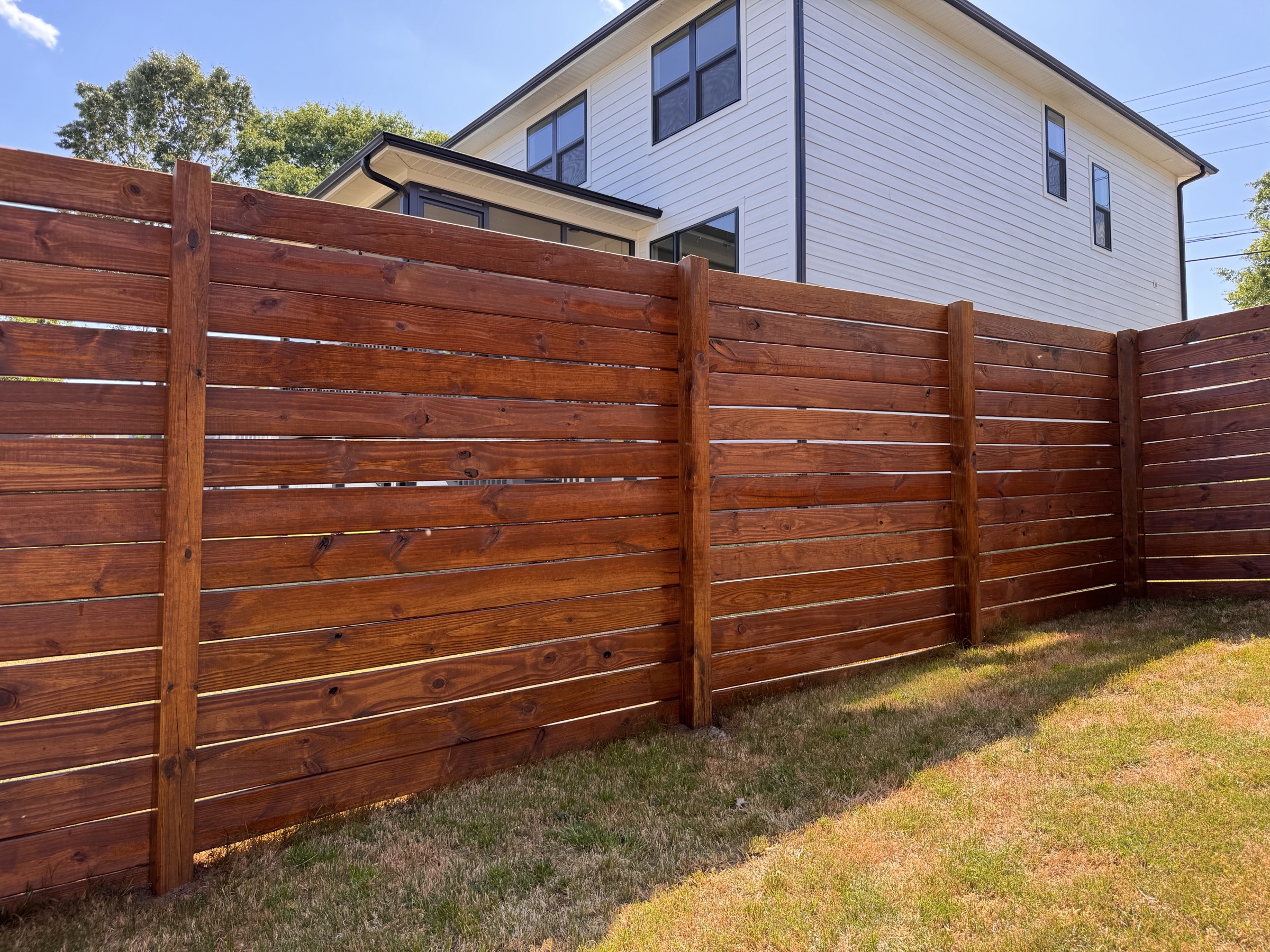
Staining your own fence is absolutely doable, and we would rather you do it right than pay us to fix it later. The pros are not guarding secrets. They are following a sequence that does not skip steps. Here is that sequence, the same one we run on fences across Greenville and Spartanburg, with the mistakes marked where people usually make them.
Step one is inspection and prep, and it decides everything after it. Walk the fence: set popped nails and screws, note rotted boards and loose pickets, and move anything leaning on the wood. If the fence is grey, dirty, or green on the shaded runs, wash it. Aged wood needs a proper wood cleaner or oxygenated bleach, a rinse at low pressure, and then dry time. Stain over dirt or grey fiber is money thrown at a fence that will look bad by next summer.
Step two is the moisture check, the step DIY skips most. Oil-based stain wants wood below 13% moisture. No meter? Do the water test: flick water on the boards and watch. Beads that sit mean not ready (too wet or mill-glazed); water that soaks in within seconds means you are close. After a wash or a rain week, give the fence dry days, not dry hours. This one patience point prevents most DIY failures we get called about.
Step three is product, and the can matters more than the color. Buy a penetrating oil-based stain from a real stain line, not the cheapest film-forming deck-and-fence coating on the shelf. Semi-transparent or semi-solid is the forgiving choice for a first-timer. For quantity, do the area math: length times height times the sides you are staining, then check the coverage rate on the can and buy a little extra for thirsty wood. Rough, weathered wood drinks more than smooth new wood.
Step four is tools. An airless sprayer is the pro choice for speed and is rentable. A pump-up garden sprayer works for stains that allow it. Brushes and stain pads are slow but bulletproof on short runs. Whatever sprays, plan to back-brush: spray a section, then work the stain into the grain with a brush before it sets. Keep mineral spirits on hand for oil-based cleanup, and treat oily rags like the fire risk they are: flat to dry, or in a sealed metal can with water.
Step five is picking the window. Aim for a dry stretch with temperatures roughly 50 to 85 degrees and no rain in the forecast for at least a day after you finish. Avoid blasting afternoon sun on hot boards, which flashes the stain before it can penetrate and leaves lap marks. Work the shade line around the fence. Morning on the east side, afternoon on the west, is not superstition. It is how the finish ends up even.
Step six is application. Work top to bottom in sections you can finish while the edge is still wet, because a wet edge is what prevents lap marks. Keep the sprayer a consistent distance from the boards and moving. Back-brush every sprayed section. Do not leave holidays (missed spots) and do not leave runs (too much in one spot). Posts, edges, and the board ends at the ground drink the most stain and need it most.
Now the mistakes we get called to fix, so you can skip them. Staining dirty wood. Staining wet wood. Buying the cheap film-former that peels in year two. Spraying in full sun with no back-brushing. And the classic: overspray on the house, the neighbor’s car, or the prize azaleas. Mask what you care about, watch the wind, and cover plants near the fence line. An hour of masking beats a weekend of apologizing.
Be honest about the scale before you start. One side of a 100-foot fence is a satisfying weekend. Both sides of 300 feet of pickets on a slope with no outdoor spigot is a different animal, and that is before the wash. There is no shame in the math saying call somebody. The fence does not care who stains it. It cares that the prep happened.
If that list already sounds like a weekend you do not have, that is the job. We do this every week with the right chemistry, the right pressure, a moisture meter, and a flat-rate price that includes the prep. Call or text 864-800-8275 or send the form. Greenville, Spartanburg, Greer, Duncan, Simpsonville, Mauldin, and the rest of the Upstate. And if you DIY it, call anyway. We will happily tell you if your plan sounds right.