
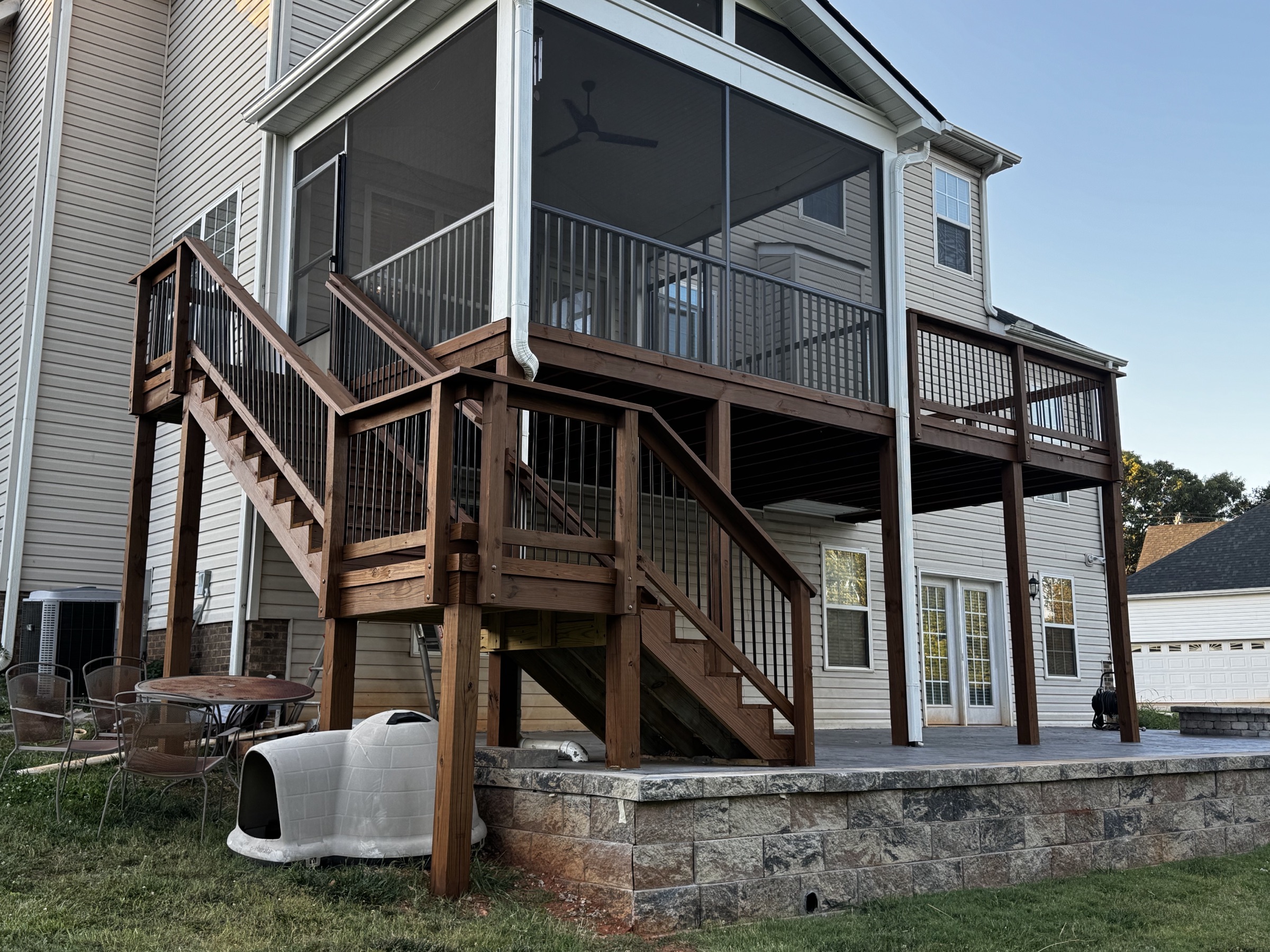
Pre-staining means the wood is stained before installation, usually indoors or under cover, and then the fence or deck gets built. That one change in sequence fixes the oldest problem in this trade: once a fence is standing, there are faces you will never coat properly again. Bottoms at the ground line, laps where boards overlap, the back faces tight to rails, the end grain on every cut. Pre-staining gets all of it while the boards are still on a bench.
Why does that coverage matter so much? Because fences do not fail in the middle of a board. They fail at the edges. The bottom six inches of a picket wicks moisture off the ground every damp morning. Laps hold water after every storm. End grain drinks rain like a straw. Those are the exact spots a spray day on a standing fence barely touches, and they are where rot and grey get their start.
Shop conditions beat field conditions and it is not close. Indoors there is no wind blowing overspray onto the neighbor's car, no dust or pollen landing in a wet coat, no 3 p.m. thunderstorm ending the day, no direct sun flashing the stain before it can penetrate. Boards lie flat so the finish levels instead of sagging. Both faces get the same even coat. The wood is metered before anything goes on it, and oil-based stain wants wood below 13% moisture, which is a reading you can actually control in a shop.
In South Carolina humidity, the timing argument matters as much as the coverage argument. Raw pressure-treated pine starts losing the race the day it hits the yard. UV starts greying unprotected wood within weeks of summer. Pollen, dirt, and mildew move into open grain while the homeowner waits for the wood to dry enough to stain. A machine soak plus backroll, or a controlled shop coat, beats a Saturday spray after the fence is already up and grey.
Pre-staining also solves the new-wood waiting problem. Fresh pressure-treated lumber is wet, sometimes soaking, and the usual advice is to wait weeks or months before staining. In a shop, that drying happens on a rack with airflow on every face, and nobody coats anything until the meter says go. The fence goes in the ground already protected, instead of spending its first Carolina summer naked.
On cost: pre-staining adds handling, and we are not going to pretend it is free. What it saves is the wash and restoration bill that grey wood racks up, the callback two years later when the bottoms rot, and the difference between a fence that ages evenly and one that looks patchy by its second summer. Priced over the life of the fence, protected-from-day-one is the cheap version.
For installers, this is the pitch. We work with fence and deck builders across Greenville and Spartanburg who want the finish handled as part of the build, not a callback two years later. We have stained over 5,000 linear feet for HOAs, developers, and commercial clients, including perimeter work for Ryan Homes, Indigo Pointe, and Reidville Town Center, so production volume and schedule discipline are not new to us. If you are an installer, talk to us before the lumber hits the truck.
For homeowners having a fence or deck built: ask your builder about pre-stained lumber before the boards go up. If they do not offer it, have them talk to us, or have the lumber come through our shop first. It adds a step to the front of the project and removes a problem from the back of it. Any builder who has torn out a rotted fence will tell you the same.
Based in Duncan, licensed (RBS 66117) and insured, working across Greenville, Spartanburg, Greer, Reidville, Lyman, Simpsonville, and Mauldin. Call or text 864-800-8275. Builders get a straight answer on volume and scheduling. Homeowners get a flat-rate quote and a 12-month workmanship warranty, with manufacturer coverage up to 3 years when you register it after the job.