
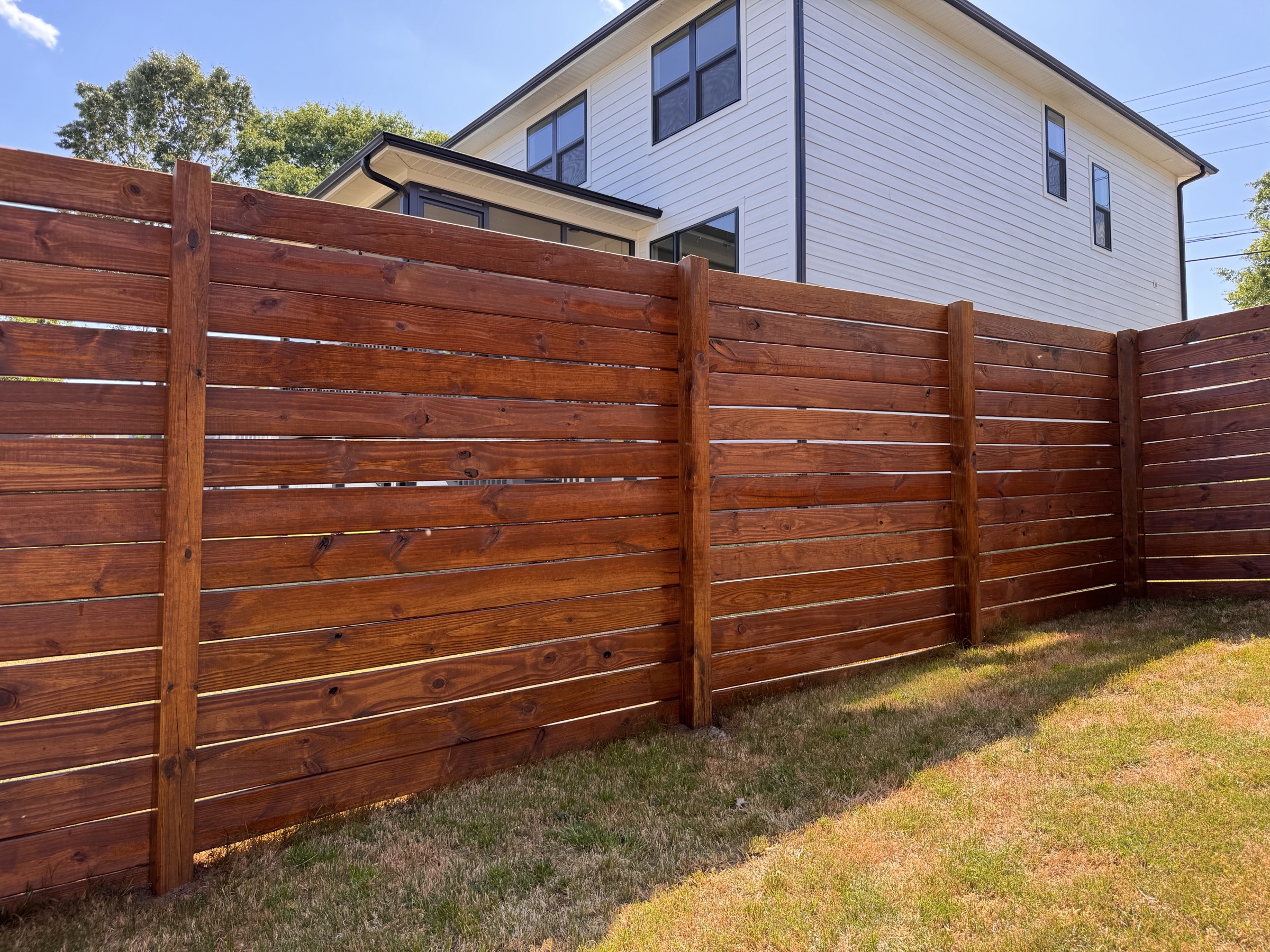
A grey fence is not automatically a new-fence project. We walk up to silver fences every week that have ten good years left in them, and we walk up to some that do not. The difference is almost never the color. It is what is under the grey, and whether anyone cleans it correctly before asking stain to fix everything.
What the grey actually is: UV has broken down lignin, the glue holding the surface fibers together, and those dead fibers are sitting on top of sound wood. Add mold and mildew in the shaded runs, dirt and pollen in the grain, maybe mill glaze on boards that were never stained, and tannin stains where leaves sat. Stain over that stack and the color looks dull and blotchy in a year, because the stain bonded to dead fiber instead of wood.
The money math is simple. Restoring and staining a sound fence costs a fraction of tearing it out and building new. Even a fence that needs a dozen pickets swapped and some fasteners tightened is usually far ahead on restoration. The fences that lose the argument are the ones with structural rot in the posts and rails, and we will tell you that straight at the estimate instead of selling you a finish for a fence that is falling over.
Our method is chemistry and low pressure, not brute force. An oxygenated wood bleach or the right cleaner does the killing and lifting: mildew, algae, dirt, and the dead grey fiber. Oxalic acid comes out when tannin or rust stains need it. Then a rinse at pressures that clean the wood without tearing it up. The chemistry does the work so the water does not have to.
Why not just blast it? High pressure on wood is how you get fuzzing, raised grain, and gouges, and it drives water deep into boards that then need days to dry. A fence cleaned at 3,000 PSI looks clean for a week and then needs sanding before it will take stain evenly, and sanding a whole fence is a bill nobody wants. Low pressure with the right chemistry leaves the surface ready instead of wrecked.
After the wash comes the part everyone wants to skip: the dry-down. Washed wood holds water, and oil-based stain wants the wood below 13% moisture. Depending on sun, wind, and humidity, that is a day to several days. We meter it rather than guess, because stain into a damp fence is a restoration wasted. Patience here is the whole job.
While we are there, we flag what the fence needs beyond color: loose pickets, popped nails and screws, boards rotted at the ground line, posts that move when you push them. Small fixes fold into the visit easily. Bigger structural problems get called out honestly, because stain is protection, not carpentry, and pretending otherwise helps nobody.
Here is the payoff. Once the wood is actually clean, brightened, and metered dry, a penetrating stain has somewhere to go. It soaks into sound fiber, the color lays down even, and the fence looks like the sample you picked instead of a duller version of it. That is the difference between a restoration and a coat of hope, and it is why the fence still looks right at year three.
A restored fence then goes on the normal clock: a re-stain every 2 to 6 years depending on opacity and exposure, with a wash in between if it gets dirty. Restoration is not a one-time miracle, it is a reset to a maintainable starting point. Fences that get that reset before the grey goes deep are the cheap fences to own.
If your fence in Duncan, Greenville, Spartanburg, Greer, or Simpsonville has gone silver, ask for a restoration quote before you price a new fence. Call or text 864-800-8275 or send the form with photos, including one close-up of the worst section. We will tell you honestly whether it is a restore, a repair-plus-restore, or a replace.