
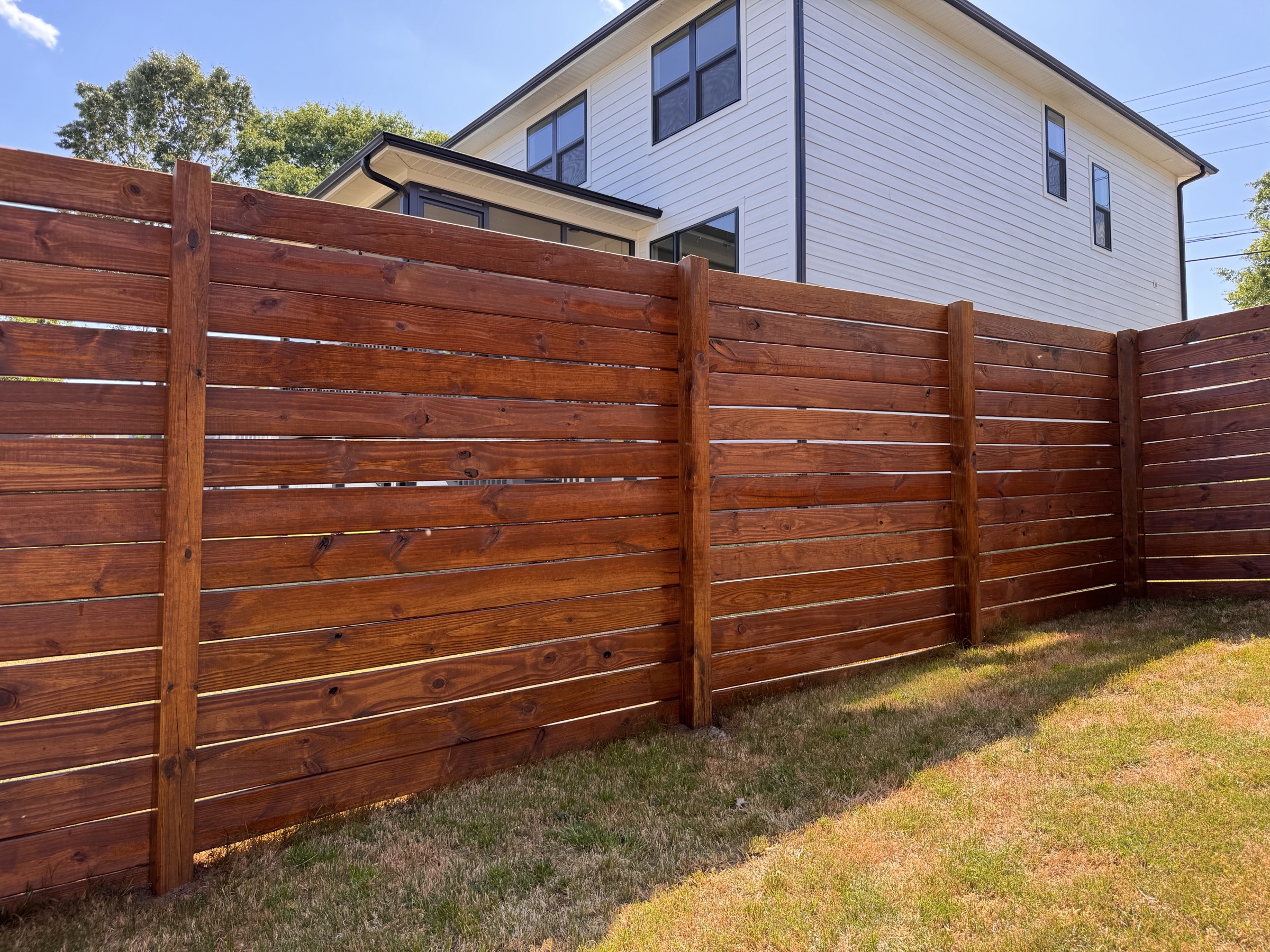
Once a fence is in the ground, you will never stain the bottoms, the laps, or the faces tight to a building as well as you could on a bench. Pre-staining is that coverage, done before install, and in South Carolina weather it is the difference between a fence that is protected and a fence that is mostly protected. Mostly is where the problems start.
South Carolina weather exploits every raw edge. The bottom of a picket sits in the splash zone and wicks moisture off wet ground every damp morning. Lap joints between boards hold water after every storm. End grain on cuts drinks rain like a straw. Our humidity keeps shaded faces damp long enough for mildew to move in. Every one of those entry points is a face that a spray day on a standing fence barely reaches, and all of them are coated before a pre-stained board ever leaves the shop.
There is a principle in wood finishing worth knowing: coat all six sides. A board sealed on every face takes on and gives up moisture slowly and evenly, which means it moves less. Movement is what cups boards, twists pickets, opens checks, and works fasteners loose. A fence built from fully coated boards stays straighter and tighter than the same fence stained after install, because the hidden faces are not silently cycling moisture while the pretty face holds color.
Ground-line rot deserves its own paragraph because it kills more Upstate fences than anything else. Pickets almost always rot in the bottom six inches first, right where rain splash, morning dew, and soil moisture concentrate. Pre-stained bottoms start that fight protected instead of raw. Pair that with a good install, meaning a little clearance off the soil and drainage that does not trap water at the posts, and you have added real years to the fence for the cost of doing the staining in the right order.
Controlled conditions are the other half of the story. A shop coat goes on wood that has been metered dry (oil-based stain wants wood below 13% moisture, and in a shop you can actually wait for that number), at a steady temperature, with no wind, no dust, no pollen landing in the wet finish, and no 3 p.m. thunderstorm ending the day. Boards lie flat so the stain levels instead of running. Compare that to hoping a spray day covers a standing fence evenly while the wind picks up and the neighbor's car sits twenty feet away.
Timing is where pre-staining quietly wins the whole argument. The standard advice for a new pressure-treated fence is to wait weeks or months for the wood to dry before staining, and during that whole wait the fence sits naked: UV greying the surface, mildew finding the shaded runs, boards starting their first unprotected wet-dry cycles. With pre-staining, the drying happens on a rack in the shop with airflow on every face, nothing gets coated until the meter says go, and the fence is protected from the day it goes in the ground.
A fair warning: pre-stained does not mean indestructible, and install day matters. Boards get cut to length on site, and every fresh cut exposes raw end grain that should get a brush coat before or right after the board goes up. Fastener holes, scuffed faces, and dings from handling want a touch-up pass after the build. We do that final pass as part of the job, because a pre-stained fence with raw cut ends is only half the promise kept.
Over the long run, this is why pre-stained fences last longer and cost less to own. The exposed faces still go on the normal maintenance clock, a re-stain every 2 to 6 years depending on opacity and sun exposure. But the hidden faces, the ones that rot fences from the inside out, stay protected for the life of the boards. You are maintaining a healthy fence instead of fighting one that is failing from places you cannot see.
Two calls to action, because two kinds of people read this. Homeowners putting in a new fence: ask your builder about pre-stained lumber before the boards go up, and if they do not offer it, send them our way. Installers: we want that partnership, and we have the commercial track record to keep your schedule. Either way, call or text 864-800-8275. Based in Duncan, licensed (RBS 66117) and insured, serving Greenville, Spartanburg, Greer, Reidville, Lyman, Simpsonville, Mauldin, and the rest of the Upstate, with a 12-month workmanship warranty behind every coat.