
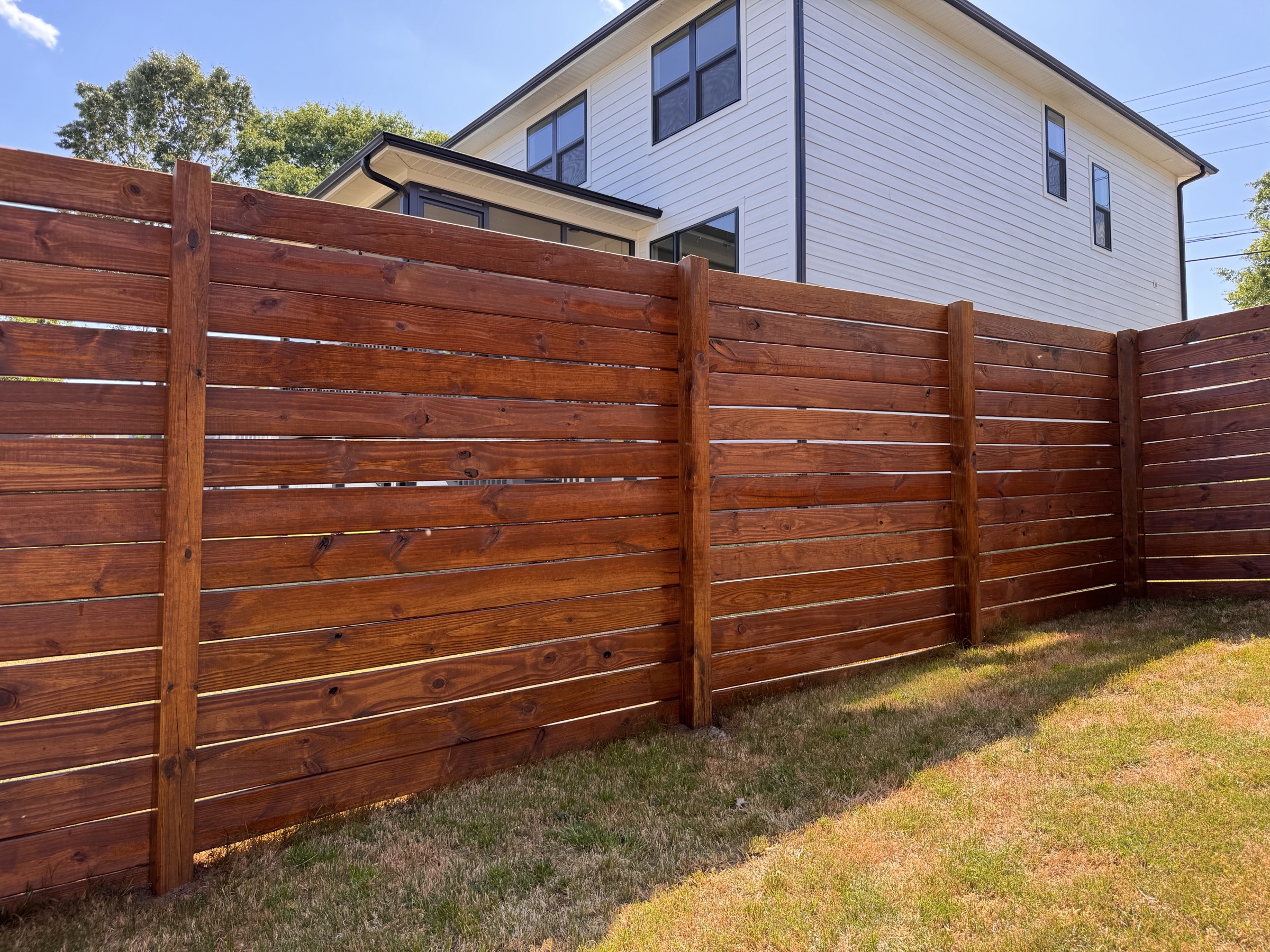
Upstate summers cook fences. High humidity, a long UV season, and pop-up storms cycle wood through soaked and baked until it greys, checks, and splits. A fence in Greenville or Spartanburg is not sitting politely in the yard. It is in a fight with the weather every day from May through September, and stain is the armor.
The cycle is the killer. A storm week soaks the boards and they swell. A heat wave bakes them dry and they shrink. Every cycle works the fibers, opens checks, loosens fasteners, and gives UV a fresh crack to dig into. Left alone, that cycle turns a straight fence wavy and a smooth deck splintered, and no coat of anything applied afterward undoes movement that already happened.
Here is what a penetrating stain actually does, mechanically. The pigments block UV before it can break down lignin, which stops the greying at the source. The oils and resins soak into the fibers and slow how fast the wood takes on and gives up water, which softens every wet-dry cycle the fence goes through. And a water-shedding surface keeps rain from sitting in the grain. It is not cosmetics. It is slowing the exact processes that destroy the wood.
This is also why film finishes lose here. Paint and film-forming stains sit on top of the wood, and wood in this climate never stops moving. The film cracks, humidity gets behind it, and sheets let go. A penetrating oil-based stain cannot peel, because there is no film to peel. It fades slowly and takes a maintenance coat, which is exactly the failure mode you want: graceful and cheap to fix.
The moisture gate still applies, armor or not. Oil-based stain wants wood below 13% moisture, and we check with a meter. Fresh pressure-treated pine often needs 4 to 6 weeks or more after installation before the meter says go, and cedar can often go sooner. Stain too early and you trap the moisture you were trying to manage. Stain at the right reading and the finish cures into the wood instead of on top of a problem.
Prep is the other half of the defense. Expert Stain and Seal and similar penetrating products cannot save dirty wood. Mildew sealed under stain keeps growing. Grey dead fiber under stain lets go and takes the finish with it. If the fence is already silver, plan on a wash as part of the job. Clean, dry, sound wood is what the stain is designed to protect, and it is the only version that works.
The cost of waiting one more year is real money. A fence that gets stained on time needs a wash and a maintenance coat down the road. A fence that greys first needs the wash anyway, plus more product to satisfy thirsty weathered wood, and the checks and cups it picked up are permanent. We see the difference on estimates every week: maintained fences are cheap jobs, neglected fences are projects.
Once protected, the fence goes on a rhythm: a re-stain every 2 to 6 years depending on opacity and exposure. South- and west-facing runs and deck floors wear first and may want attention sooner. Semi-solid finishes stretch the cycle; transparent finishes shorten it but show off the grain. We will tell you at the estimate what cycle your specific fence is signing up for.
Timing your defense beats timing your repair. Booking before summer means the armor is on before the worst UV and storm months, and spring schedules have room to slide around weather. The panicked July call still gets answered, but the fence has already eaten two months of damage by then, and the calendar is tighter.
Protect it before July. Call or text 864-800-8275 or send the estimate form with a couple of photos. We serve Greenville, Spartanburg, Greer, Duncan, Reidville, Lyman, Simpsonville, and Mauldin, and every job carries a 12-month workmanship warranty plus manufacturer coverage up to 3 years when you register it.